Nail trims are one of those grooming tasks that are easy to put off. Your dog’s nails don’t look that long, the clippers are buried in a drawer somewhere, and the last attempt ended with your dog hiding under the bed. Then one day you hear that telltale click, click, click across the kitchen floor and realize it’s been a while.
You’re definitely not alone, and it’s exactly why so many pet parents rely on dog nail trim services! In this guide, we’ll cover why nail length matters, how often most dogs need a trim, what the quick is and why it matters, the difference between clipping and grinding, what actually happens during a professional appointment, and how to help a nervous dog feel more at ease.
Why Nail Length Matters
When a dog’s nails grow too long, they press against the ground every time your dog stands or walks. That can change the way the paw sits and, in turn, how your dog carries their weight. For many dogs, long nails can contribute to an awkward posture, discomfort, and less confident footing, especially on smooth floors where they can’t grip well with their paw pads.
Long nails are also more likely to snag on carpet, blankets, or outdoor surfaces, which can lead to a painful split or torn nail. And they’re simply less pleasant for the people around them, whether that’s scratched floors, snagged clothing, or a well-meaning paw on the leg that leaves a mark.
Keeping nails at a comfortable length is one of the simplest things you can do to support your dog’s day-to-day comfort and mobility.
How Often Should Dogs Get a Nail Trim?
Here at Ken Caryl Pet Spa, we recommend nail trims for most dogs about once a month. That said, every dog is a little different, and a few factors can shift the timing.
Dogs who walk or run on pavement regularly might wear their nails down naturally and need trims a bit less often. Dogs who spend more time on grass, carpet, or the couch, along with many smaller breeds and senior dogs who are less active, often need trims more frequently.
A couple of quick checks can tell you when it’s time. If you hear clicking when your dog walks across a hard floor, the nails are likely touching the ground and ready for a trim. You can also look at your dog while they’re standing on a flat surface. In general, the nails shouldn’t be pressing into the floor.
Understanding the Quick
Inside each nail is the quick, a living core that contains a blood vessel and nerve. It’s the reason nail trims require care! Cutting into the quick is painful for a dog and usually causes bleeding, which is why groomers trim conservatively and pay close attention to each nail.
On light-colored nails, the quick is often visible as a pink area inside the nail. On dark nails, it’s much harder to see, so trimming is done gradually, in small amounts, while watching the cut surface for signs that the quick is getting close.
The quick also grows along with the nail. When nails go a long time between trims, the quick can extend further toward the tip, which means the nail can’t be cut back as short in one session without reaching it. The encouraging part is that regular trims can often help the quick gradually recede over time, making it possible to keep nails at a shorter, more comfortable length.
Clipping vs. Grinding: What’s the Difference?
Professional dog nail trim services typically use one or both of two methods. Here’s how they compare:
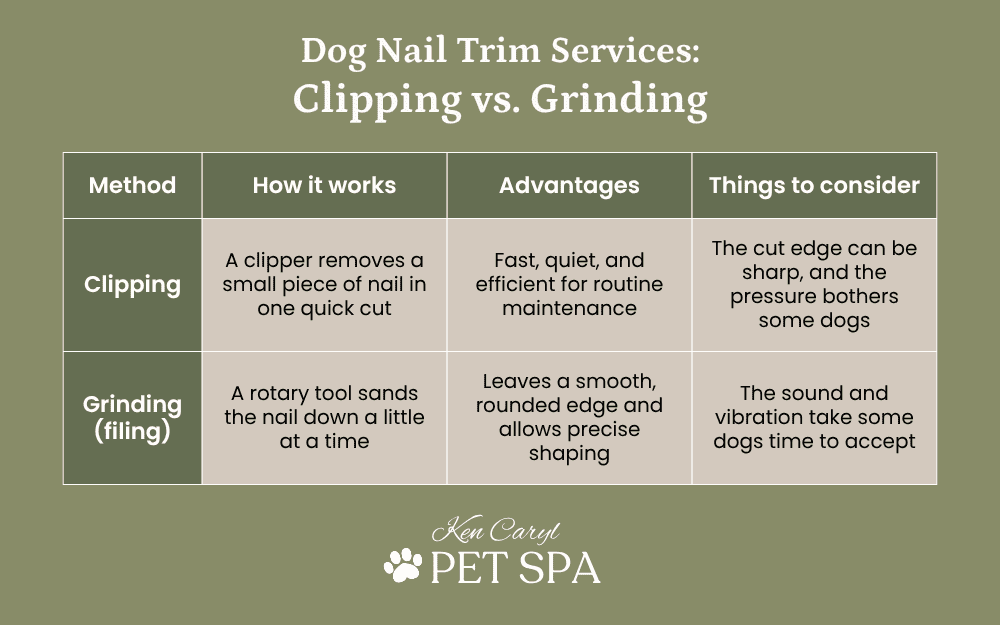 Many dogs end up with a combination of the two. A trim with clippers takes care of the length, then a quick pass with a grinder smooths the edges so they’re less likely to snag. Grinding can also help get nails a little shorter than clipping alone, since it removes nail gradually.
Dogs tend to have their own preferences, too. Some barely notice the clippers but dislike the buzz of a grinder, while others find the gentle sanding easier to handle than the squeeze of a clipper. A good groomer pays attention to which your dog tolerates best.
What to Expect at a Dog Nail Trim Appointment
If your dog has never had a professional nail trim, knowing what happens can take some of the mystery out of it.
At Ken Caryl Pet Spa, our Nail Trims & Filing service is designed to be quick, careful, and comfortable. Each visit includes a careful trim to a safe, comfortable length, and we can add filing for a smooth, tidy finish. You don’t need to book a full grooming appointment to come in for nail care.
Our nail technicians typically start by letting your dog settle in, then gently handle each paw to check the nails’ length and color and where the quick is likely to be. They’ll also take your dog’s temperament into account, since a relaxed dog and a wiggly one may need slightly different approaches.
From there, they work nail by nail, taking off small amounts and checking as they go, then smooth each nail if filing is part of the plan. We work at your dog’s pace, especially with nervous dogs, seniors, and first-time guests, and we keep detailed notes so future visits feel familiar.
For most dogs, it’s over quickly! You can also help set your dog up for success by going for a walk beforehand to burn off extra energy, and letting the team know about any past nail trim experiences, good or bad.
Nervous Dogs and Nail Trims
Plenty of dogs feel uneasy about having their paws handled, and that’s completely normal! It doesn’t mean you’ve done anything wrong, your dog may just need a little extra patience.
At home, make paw handling part of everyday life. While your dog is relaxed, gently hold a paw for a second or two, then reward them with a treat or praise. Over time, you can work up to touching individual toes and nails. At the appointment, our calm environment and our friendly groomers who don’t rush make a big difference, and short breaks between paws can help too.
Nail Care Through Colorado’s Seasons
Before we wrap up, it’s important to keep in mind that our local Colorado weather can affect your dog’s paws in ways that are easy to overlook! In winter, de-icing products on sidewalks and driveways can cling to paws and the fur around the nails, so wiping your dog’s feet with a damp cloth after walks is a good habit. Cold, dry air may also leave some dogs’ nails a bit more brittle, so keep an eye out for rough or flaking edges.
Warmer months bring more time on trails, and rocky terrain can sometimes chip or crack a nail. After a hike, take a quick look at your dog’s feet for any nails that look rough, split, or uneven. A smooth filing can tidy up minor roughness, while a nail that’s cracked near the base or bleeding should be checked by your veterinarian.
Dog Nail Trim Services: FAQs
Does it hurt my dog to have their nails trimmed?
When it’s done carefully, a nail trim shouldn’t hurt. The outer part of the nail doesn’t have nerves, so trimming it feels similar to us cutting our fingernails. Discomfort usually comes from cutting into the quick or from the stress of being held, which is why a gradual, patient approach matters.
What should I do if my dog’s nail bleeds at home?
If you accidentally cut into the quick, stay calm and apply a styptic powder made for pets, or press a clean cloth firmly against the nail for a few minutes. Most minor bleeding stops fairly quickly. If it doesn’t stop, or the nail looks badly damaged, contact your veterinarian.
Do dewclaws really need to be trimmed?
Yes. Because dewclaws sit higher on the leg and don’t touch the ground, they don’t wear down naturally. Left untrimmed, they can grow long enough to curl around and press into the skin, so they deserve the same attention as the rest of the nails.
When should my puppy have their first nail trim?
The earlier your puppy gets used to nail care, the better. Short, gentle trims while they’re young help them learn that it’s a normal part of life. Your groomer can trim just the tips at first, focusing more on building comfort than on taking off length.
Small Paws, Big Difference
Nail care might seem like a small detail, but it shows up in so many parts of your dog’s life: how they walk, how they play, and how comfortable they feel moving around the house. The best part is that keeping nails in good shape doesn’t have to be stressful! With regular trims and a patient approach, most dogs come to see nail care as just another part of their routine.
If you’re ready to stop dreading nail day, Ken Caryl Pet Spa offers dog nail trim services that fit easily into your schedule. Call us at (720) 981-7387 or request an appointment online for a nail trim and filing, and we’ll help keep your dog’s paws comfortable from one month to the next.