Regular brushing keeps a long-haired dog’s coat healthy, but even diligent owners often end up with a matted pet anyway. Here’s why — and how to brush more effectively.
Why Do I Brush My Dog Regularly and He’s Still Matted?
Every day we talk to pet owners who are trying to keep their long-haired breeds from getting matted, but it seems to happen anyway.
My Dog Doesn’t Look Tangled or Matted
Most people focus on the top coat and back when brushing — that area is the easiest to brush, but also the last to get tangled and matted. Concentrate on the legs, the tail area, and the head, ears, and neck. Coincidentally, these are the hardest areas to get cooperation from your pet.
What Causes the Matting in the First Place?
Many factors can cause matting, including seasonal changes, snow and wet weather, other dogs licking the ears and face, and the shift from puppy coat to adult coat that happens anywhere from 7–10 months of age. One common mistake pet parents make is bathing their pet before brushing — always brush first. Bathing tightens up existing mats, making the job harder and the whole experience less pleasant for both of you.
Why Can’t My Matted Dog Just Be Brushed Out?
Pets with a fine, downy coat are harder to keep detangled than pets with a coarser, more bristle-like texture — this shows up a lot in Goldendoodles, since their coat types aren’t consistent. Once tangles are tight against the skin, there’s no way to humanely get underneath them without risking injury. We practice humanity before vanity: sometimes just an inch or two off the length can keep a coat far more manageable, and hair always grows back.
What Do I Need to Brush My Dog Effectively?
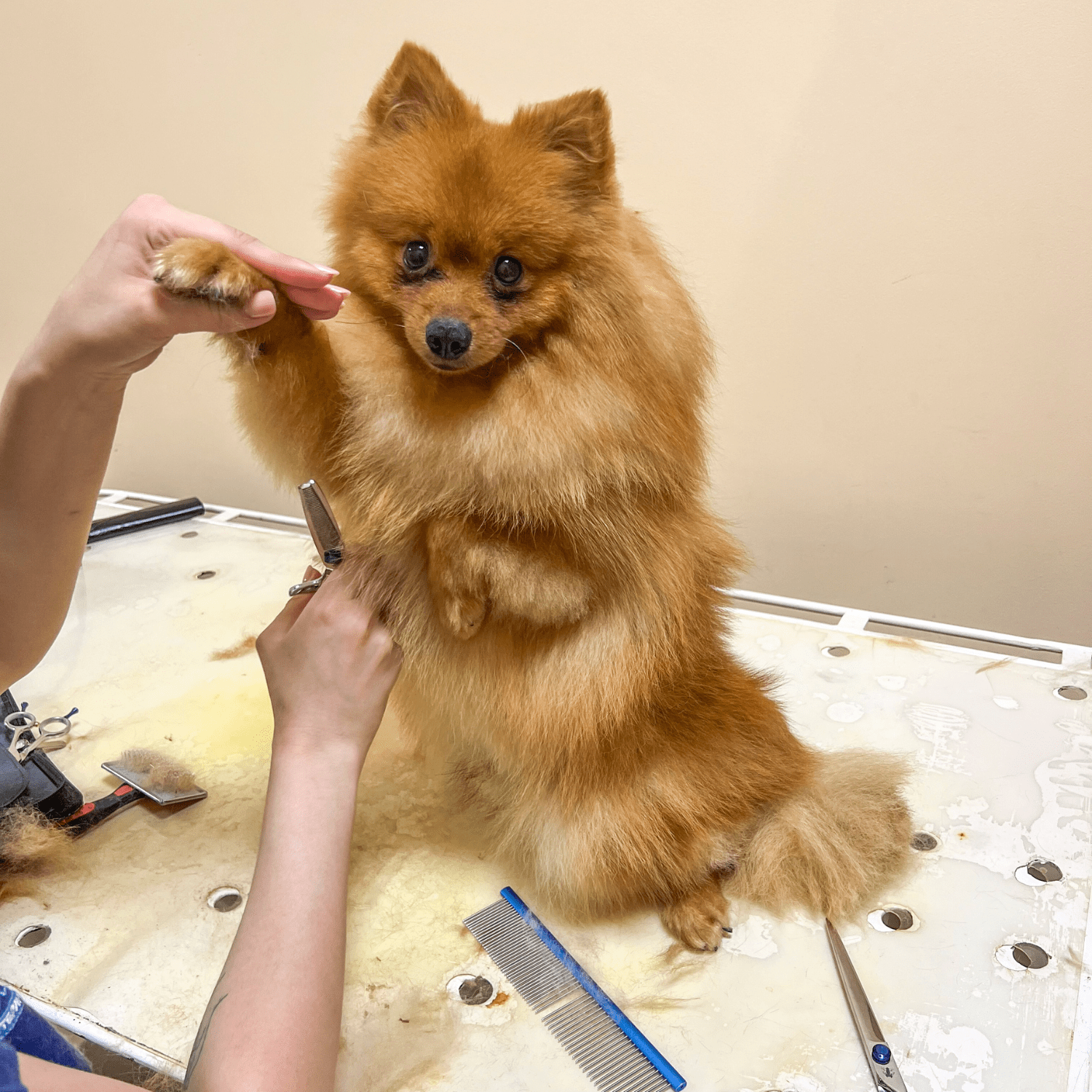
We recommend a good-quality slicker brush — it needs less pressure to get through the coat while still reaching the skin. Use a technique called line brushing: work through one small section at a time, then go back through with a metal comb to check your work. If the comb doesn’t glide through easily, go back over that section with the slicker. High-value treats during the session help too, especially with puppies — keep early sessions short and let them know they’re doing great.
I Don’t Want My Dog Shaved
We understand, and we don’t want to shave your pet either. Shaving a tightly matted coat isn’t easier for us — it’s technically challenging, and the risk of injury goes up because matted skin becomes harder to tell apart from the coat. Left alone, matting only gets tighter, which can cause pain, bruising, and skin irritation, and it creates a humid, protected environment that ticks, fleas, yeast infections, and mange can take advantage of. The hair will grow back, and we can work together to get your pet’s coat back to where you want it.
What If I Just Can’t Seem to Do This?
We’re happy to show you how to properly brush your pet with the right tools — a slicker brush and a metal comb — so you can maintain the coat length you prefer. The longer the coat, the more upkeep it needs at home and the more often a groomer visit helps. We recommend starting puppies on professional grooming around 16 weeks, even before they need a haircut, so they get comfortable with brushing, bathing, and drying early. Or, if you’d rather we do the dirty work, we’re happy to provide a bath and brush anytime.